The GreenCare Company

SERVICES     GALLERY      FAQ

The GreenCare Company

SERVICES     GALLERY      FAQ

Justin, TX Lawn Pest & Grub Control2026-09-18T13:27:31-05:00

Serving Justin & 10 miles out

Lawn Pest & Grub Control for Justin, Texas Homes

Fire ants, grubs, chinch bugs, and brown-patch fungus can hollow out a North Texas lawn from below before you ever see it. We find the real cause and treat it — on a schedule built for your soil and grass.

5.0 on Google — from homeowners right here in the area

What we shut down

The insects and fungus that thin out Justin lawns — identified, then treated for what they actually are.

5+

Grubs per sq. ft. is the point where turf damage sets in

Jun–Sep

Peak window for grubs and chinch bugs in North Texas

Same crew

The team that mows your lawn handles the treatments

1 call

One local number for mowing, feeding, and pest control

Why Justin lawns get hit

Warm-season grass, humid springs, and dense clay make a comfortable home for pests

Almost every lawn in Justin is a warm-season grass — Bermuda, St. Augustine, or Zoysia — and those are exactly the grasses that white grubs and chinch bugs feed on hardest through the summer. Add humid spring and fall weather and you get the fungal diseases, brown patch and take-all root rot, that show up as spreading circles of dying grass.

The tricky part is that grubs, chinch bugs, drought stress, and fungus can all look identical from the curb: a patch of brown, thinning turf. Treating the wrong one wastes a season. We start by figuring out what’s actually happening under your grass, then match the treatment to it. It’s the same approach we build into our Justin residential lawn care program and time against the North Texas lawn care calendar.

“Damaged turf that peels back like a loose rug is the classic sign of grubs — not drought.”

— The GreenCare crew, on reading what’s under the grass
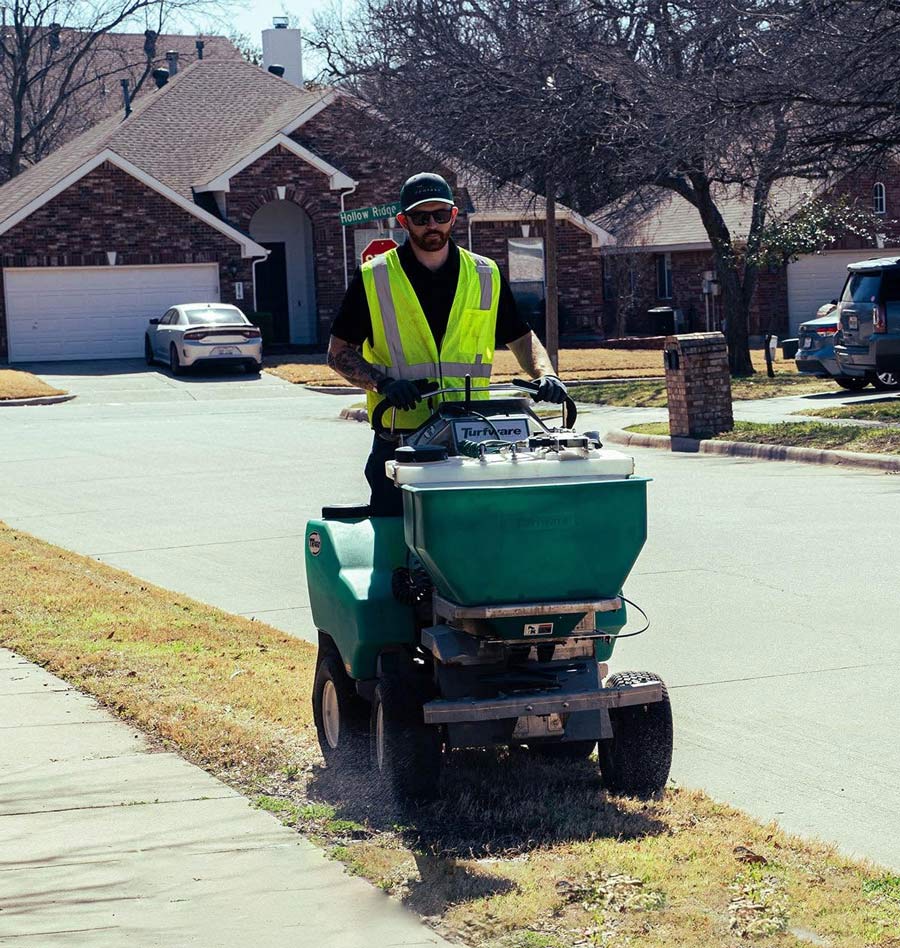
Lawn Pest and Grub Control Justin Texas Lawn Care Professional

Know what you’re dealing with

The pests and diseases behind most Justin lawn damage

Six culprits account for the majority of the brown, thinning, and dying patches we’re called out to fix. Here’s what each one looks like, when it strikes, and how we handle it.

Insect · year-round

Fire ants

WHAT YOU SEE

Raised dirt mounds that flare up after rain, plus painful, aggressive stings near walks and play areas.

OUR APPROACH

Scheduled broadcast bait across the yard plus direct mound treatment, so colonies die out instead of just moving a few feet over.

Insect · summer-fall

White grubs

WHAT YOU SEE

Spongy, irregular brown patches; turf that lifts by hand like carpet; birds or skunks digging at night.

OUR APPROACH

Preventive treatment timed to early summer when grubs are young, with a curative option in fall once feeding damage appears.

Insect · hot months

Chinch bugs

WHAT YOU SEE

Expanding yellow-to-brown patches in the hottest, sunniest spots of a St. Augustine lawn — while nearby Bermuda stays green.

OUR APPROACH

We confirm live bugs before treating, since the damage mimics drought, then treat the affected zones and shore up the turf around them.

Fungus · wet spring/fall

Brown patch

WHAT YOU SEE

Roughly circular rings of tan, matted grass in cool, wet weather — worst on St. Augustine after heavy watering or rain.

OUR APPROACH

We correct overwatering and improve airflow first, then time a fungicide so the ring stops spreading and the turf fills back in.

Fungus · spring

Take-all root rot

WHAT YOU SEE

Yellowing, thinning patches in spring where the grass pulls up easily because the roots have rotted away.

OUR APPROACH

Managed with soil health and cultural fixes, not spray alone — a fit for the alkaline Blackland clay under most Justin yards.

Insect · late summer/fall

Armyworms & webworms

WHAT YOU SEE

A lawn that looks chewed down almost overnight, often in fall, sometimes with birds feeding heavily on the grass.

OUR APPROACH

Fast scouting and treatment during outbreak season, since these caterpillars can strip a healthy lawn in a day or two.

Not sure which one you have? That’s normal — we diagnose it for you. For deeper identification, Texas A&M’s AgriLife Extension turf pest resources are a solid reference.

How our program works

Diagnose first, then treat — in that order

Blanket-spraying a whole yard for the wrong problem is how lawns get worse and budgets get wasted. Our program runs the same four steps every time.

01

Inspect & identify

We check the roots, soil, and damage pattern to tell grubs, chinch bugs, fungus, and drought apart before touching a product.

02

Targeted treatment

The right product for the actual pest, applied only where it’s needed — not a one-size spray across the lawn.

03

Prevention timing

Seasonal applications timed to the North Texas pest calendar, so grubs and fungus are stopped before they take hold.

04

Monitor & adjust

We recheck on our regular visits and keep notes on your lawn, so recurring problems get caught early next season.

When we treat

A pest-control year in North Texas

Timing is most of the battle. Here’s the rough shape of a season — we tailor the exact dates to your lawn and pair it with your full lawn care calendar.

Spring

  • Watch for take-all root rot as grass wakes up
  • First fire ant bait rounds begin
  • Scout early for brown patch in wet spells

Early Summer

  • Preventive grub treatment goes down
  • Chinch bug monitoring starts in sunny St. Augustine
  • Keep fire ant baiting on schedule

Late Summer

  • Peak chinch bug and grub activity
  • Curative grub control if damage shows
  • Begin watching for armyworm outbreaks

Fall

  • Fast response to armyworm and webworm flare-ups
  • Brown patch returns with cooler, wet weather
  • Final fire ant treatments before dormancy

Why homeowners pick us

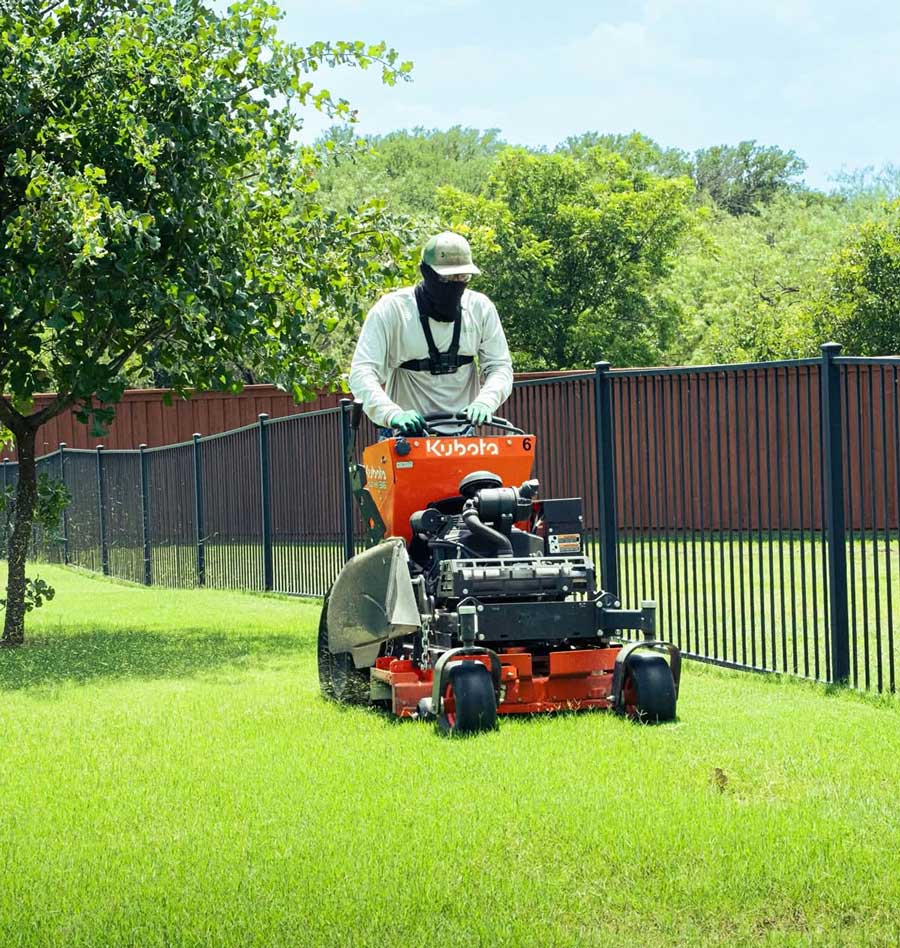
A neighbor who knows the soil, not a route from an hour away
Where we treat

Justin and about 10 miles in every direction

If you’re within roughly a 10-mile drive of our Justin shop, your lawn is on our route.

Justin, TX

Argyle, TX

Frisco, TX

Lake Dallas, TX

Denton, TX

McKinney, TX

Prosper, TX

Celina, TX

Allen, TX

Plano, TX

The Colony, TX

Little Elm, TX

Flower Mound, TX

Lewisville, TX

Aubrey, TX

Good to know

Questions Justin homeowners ask about lawn pests

Can you actually get rid of brown patch fungus?2026-09-18T11:34:16-05:00

We can stop it from spreading and help the lawn recover, but brown patch is a seasonal, weather-driven disease that can return whenever conditions turn cool and wet. The lasting fix is managing how the lawn is watered and how air moves through it, with a timed fungicide when needed — which we build into your ongoing plan.

Do you handle fire ants too?2026-09-18T11:33:53-05:00

Yes. Fire ants are part of our regular pest program. We use scheduled broadcast baiting across the whole yard plus direct treatment on active mounds, which is far more effective than knocking down one mound at a time and watching the colony relocate.

Why is only part of my lawn browning while the rest looks fine?2026-09-18T11:33:32-05:00

When St. Augustine browns out in the hot, sunny parts of the yard while Bermuda nearby stays green, that pattern points strongly to chinch bugs. Circular rings instead of irregular patches point more toward brown patch fungus. Either way, the shape and location of the damage tell us a lot — which is why we look before we treat.

Are the treatments safe around kids and pets?2026-09-18T11:33:08-05:00

Yes, when they’re applied correctly. We follow every product’s label directions and re-entry interval, and we’ll tell you how long to keep children and pets off the treated area — usually just until it’s dry. Keeping people and animals off during that short window is the main thing that matters.

When should grub treatment go down?2026-09-18T11:32:44-05:00

Preventive treatment works best in late spring to early summer, while grubs are small and feeding near the surface. If damage has already shown up in late summer or fall, a curative treatment is the better call. We time it to your lawn rather than to a fixed calendar date.

How do I know if it’s grubs or just drought?2026-09-18T11:32:13-05:00

The giveaway is the roots. Grub-damaged turf feels spongy underfoot and peels back by hand like a loose rug, because the roots have been chewed away — drought-stressed grass stays anchored. Nighttime digging by birds or skunks is another strong hint. We confirm by checking a few soil sections before recommending any treatment.

Get ahead of the damage this season

Tell us what your lawn is doing and we’ll figure out the cause — free,
no obligation, from a crew based right here in Justin.

📍 216 E 4th St, Suite B, Justin, TX 76247 ☎ 469-830-8300   5.0 on Google

Go to Top